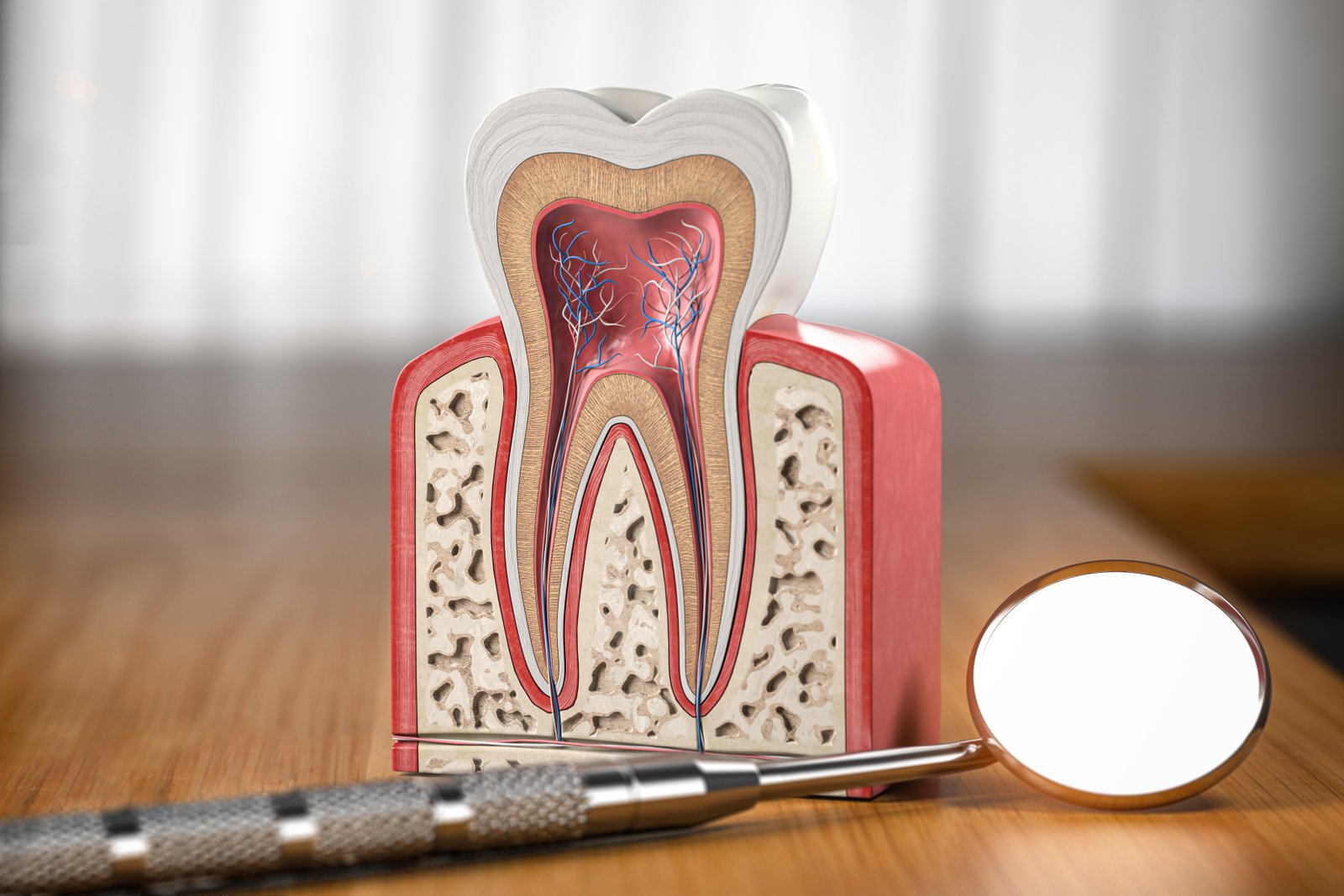
An infected or damaged nerve inside a tooth doesn't necessarily mean losing that tooth, Root Canal Treatment in Ahmedabad exists precisely to avoid that outcome. It usually comes up when deep decay, a crack, or an injury has let infection reach the inside of the tooth.
At Dr. Bhalla Dental Clinic, Ahmedabad, the dentist examines the tooth first to confirm whether root canal treatment actually applies. Also called RCT Treatment in Ahmedabad, the process removes infected pulp, cleans out the canals, seals everything up, and gets the tooth functioning again.
What Is Root Canal Treatment?
It clears out infected or damaged pulp from inside a tooth, then seals the cleaned canals shut. This is what saves a tooth once its pulp can't heal on its own.
Inside every tooth sits pulp, nerves, blood vessels, the works. Deep cavities, repeated dental work, cracks, or trauma can all open a path for bacteria to reach it. Left alone, that infection spreads into the surrounding tissue.
Root canal therapy, also known as endodontic treatment, is how a dentist clears out the source of infection while keeping the natural tooth intact wherever that's possible.
What Are the Symptoms of a Tooth Infection?
Ongoing toothache, sensitivity that won't quit, swelling, or pain when you bite down can all point to infection. That said, some infected teeth barely announce themselves at all.
What tends to show up:
- Persistent or severe toothache
- Sensitivity to hot or cold
- Pain while chewing or biting
- Swollen or tender gums
- A recurring gum boil or pus
- Darkening or discolouration of a tooth
- Swelling around the tooth
- Pain that may spread to the jaw or surrounding area
Symptoms alone don't confirm anything. A clinical exam, plus X-rays, is what actually tells the dentist what's happening with the pulp and the bone around it.
Root Canal Treatment Steps
The process moves through clearing infected pulp, cleaning the canals, sealing them, and restoring the tooth. How many visits it takes depends on the tooth itself and how complex the infection is.
Step 1: Examination and Diagnosis
First, the dentist looks at the tooth and works out how far the infection's gone.
X-rays usually get pulled in at this point too — they show the roots and the bone around them, which combined with your symptoms shapes what happens next.
Step 2: Local Anaesthesia
Numbing the area is what keeps this comfortable.
The tooth gets isolated before anything begins. These days, pain control during a root canal is genuinely effective — not the ordeal people sometimes expect.
Step 3: Removing the Infected Pulp
The damaged pulp comes out from inside the tooth.
An opening is made to reach the pulp chamber and canals. Once that damaged tissue is cleared, the canals are ready for the next stage.
Step 4: Cleaning and Shaping
The canals get cleaned, disinfected, and shaped before sealing.
Getting every bit of bacteria and infected material out matters here — that's the whole point of this step. Shaping the canals properly is what lets them be filled correctly afterward.
Step 5: Sealing the Root Canals
Once clean, the canals get filled and sealed, cutting down the odds of reinfection.
A suitable filling material goes into the prepared canals. From there, the tooth gets restored so it can actually function again.
Step 6: Final Restoration
Depending on how much natural structure is left, the tooth might need a filling — or a crown.
Back teeth take a lot of chewing force, so a crown often makes sense once significant structure's been lost. What's right depends entirely on the individual tooth.
Root Canal Aftercare and Recovery
Recovery mostly comes down to protecting the treated tooth, keeping up oral hygiene, and following whatever the dentist tells you.
Steer clear of hard foods on that tooth until the final restoration's done, or your dentist gives the all-clear. Brushing twice daily and cleaning between teeth continues as normal.
Real root canal aftercare means actually showing up for follow-ups and getting the permanent restoration done. Put that off too long, and the tooth's left more vulnerable to fracturing.
Root Canal vs Tooth Extraction
A root canal keeps the natural tooth. Extraction removes it entirely. When a tooth can be reliably restored, keeping it is usually the preferred route over pulling it.
| Factor | Root Canal | Extraction |
|---|---|---|
| Natural tooth | Preserved | Removed |
| Typical use case | Tooth can still be restored | Tooth cannot be predictably saved |
| Follow-up treatment | Filling or crown | Implant, bridge, or other replacement |
| Recovery | Mild tenderness for a few days | Longer healing at the extraction site |
| Long-term outcome | Retains natural biting function | Requires a replacement to restore function |
The dentist weighs remaining tooth structure, the infection, and overall restorability before deciding. If extraction does end up necessary, options like an implant or bridge come up as replacements.
Can Teeth Cleaning Prevent Root Canal Treatment?
Regular cleaning keeps plaque and tartar in check, but it can't touch an infection that's already set into the pulp.
Professional scaling and polishing clears out plaque and hardened tartar that brushing alone tends to miss. Combined with solid home care, it helps cut down the risk of cavities and gum disease generally.
None of that replaces treatment for deep decay or an actual infection, though. If pain or sensitivity shows up, a dentist needs to look at what's actually causing it.
Why Choose Dr. Bhalla Dental Clinic?
This isn't a decision to rush, a good outcome hinges on the dentist actually diagnosing things carefully, planning treatment properly, and caring enough about your natural tooth to try preserving it first.
At Dr. Bhalla Dental Clinic, Ahmedabad, every case starts with an actual assessment — not an assumption that every toothache needs an RCT. Symptoms, tooth condition, X-ray findings, and restorability all get weighed before recommending root canal therapy or something else entirely.
Book a Root Canal Consultation in Ahmedabad
Getting evaluated early is what tells you whether a damaged or infected tooth can still be saved. Don't sit on persistent pain, swelling, or sensitivity that won't go away.
Thinking about Root Canal Treatment in Ahmedabad? Dr. Bhalla Dental Clinic is where to start, an exam first, then a plan built specifically around what's actually going on with your tooth, options laid out clearly, and a recommendation that fits your situation rather than a default answer.
