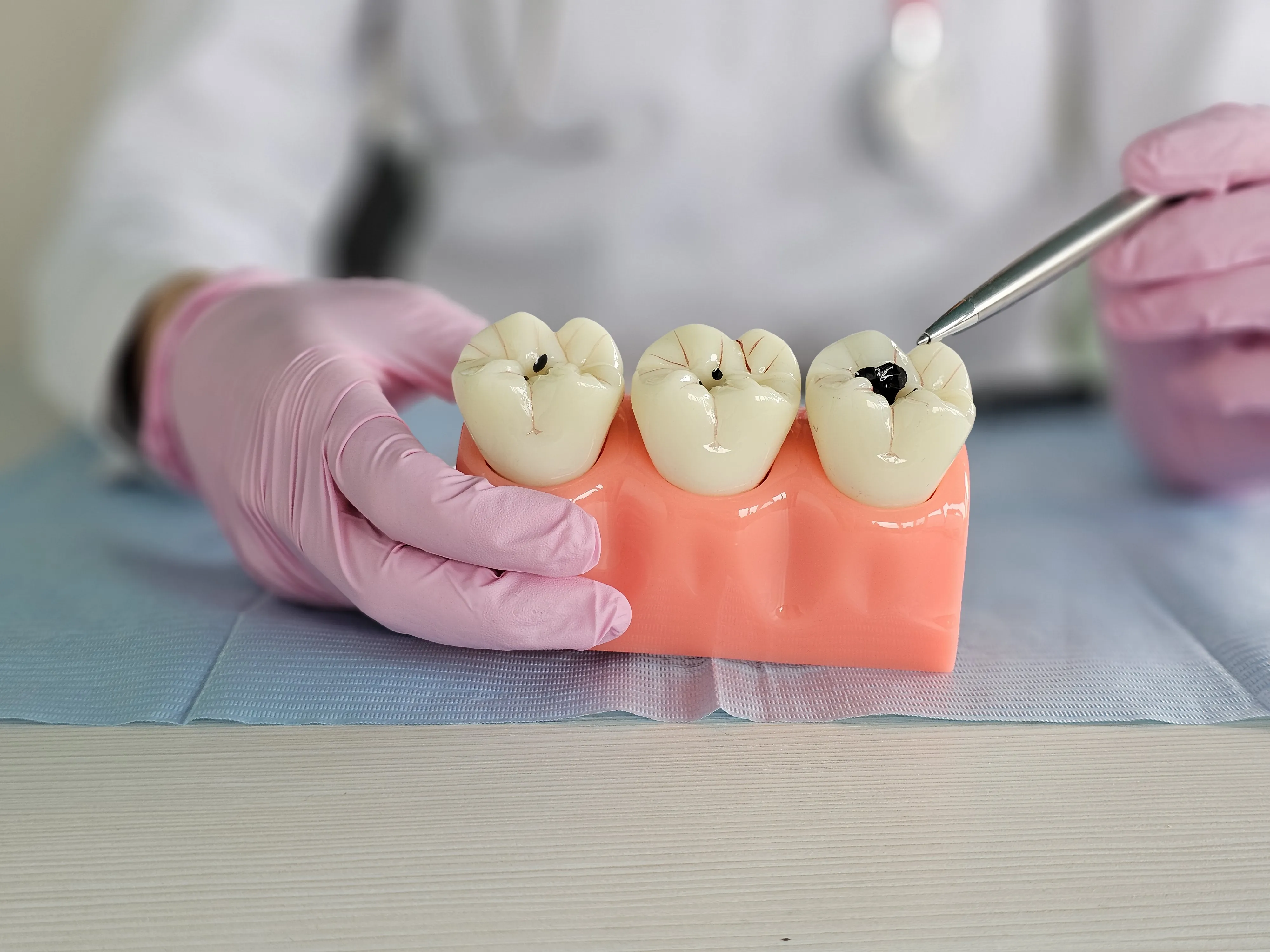
Decay or a small crack doesn't have to mean losing a tooth; that's where Dental Filling Treatment in Ahmedabad comes in. Fillings actually fixes, bringing shape and function back to what's damaged. In Ahmedabad, this works well as long as decay hasn't gone deep enough to need a root canal instead.
At Dr. Bhalla Dental Clinic, Ahmedabad, the dentist looks at how far decay has spread and what condition the tooth is actually in before deciding on a filling. The goal: clear out the decay, protect whatever healthy structure remains, and get chewing back to comfortable.
What Is a Dental Filling?
Once the damaged area's been cleaned, a filling replaces the decayed portion of the tooth.
During Dental Filling Treatment in Ahmedabad, the dentist removes whatever's decayed or weakened, cleans out the cavity, then places material suited to that spot. This restores shape and seals things off from further decay.
Fillings work when decay's created a cavity but hasn't reached the point of irreversible pulp damage. Catch it at the right stage, and the decay stops going deeper.
When Do You Need a Tooth Filling?
Usually, once decay's formed a cavity but the tooth can still be saved without a root canal.
A dentist might recommend one for visible decay, a cavity, food that keeps getting stuck in one spot, or sensitivity tied to a decaying tooth. Small chips or minor structural issues sometimes get handled with filling or bonding material too.
Not every cavity announces itself with symptoms. That's the real argument for regular checkups, catching decay before it's had time to spread.
Types of Dental Fillings
Several materials exist, and which one fits depends on the tooth and how much damage there is.
Cavity size and location, chewing pressure, appearance, durability, and how much tooth structure remains, all of it factors into the dentist's choice.
| Filling Type | Appearance | Best Suited For | Durability |
|---|---|---|---|
| Composite | Tooth-coloured, blends in | Front teeth, visible areas, small to moderate cavities | Good, but wears faster than amalgam |
| Amalgam | Silver-toned, more visible | Back teeth with heavy chewing force | Very strong, long-lasting |
| Inlays / Onlays | Can be tooth-coloured or metal | Larger damage that doesn't need a full crown | Strong, preserves more natural tooth |
Dental Filling Procedure
The process runs through examining the tooth, clearing decay, restoring the cavity, and checking the bite at the end.
Step 1: Examination
The dentist examines the affected tooth and may recommend an X-ray when necessary.
This shows how deep the decay's gone and whether a filling will actually do the job. Surrounding teeth and gums get a look too, in case anything else needs attention.
Step 2: Local Anaesthesia
Not every filling needs numbing — it really comes down to the cavity's depth and how the patient tends to handle discomfort. Whatever the plan, the dentist explains it before anything starts.
Step 3: Decay Removal
The decayed portion is removed and the area is cleaned.
Damaged structure comes out, healthy structure stays wherever possible. Once that's done, the area gets cleaned before anything new goes in.
Step 4: Filling Placement
The selected material is placed and shaped to restore the tooth.
With composite, it often goes in layered, hardened under a curing light each time. From there, the dentist shapes and polishes until it actually fits the tooth properly.
Step 5: Bite Check
The dentist checks the bite and makes adjustments if required.
Closing your mouth and chewing should feel normal afterward. If the filling sits too high, small adjustments fix that on the spot.
Dental Filling vs Root Canal
A filling handles decay when the pulp's still fine. A root canal is for when the pulp itself is infected or irreversibly inflamed.
Which one applies depends entirely on how deep the decay's gone. Ongoing toothache, sensitivity that won't ease up, swelling, or pain while biting down can all point toward something deeper, though symptoms vary a lot person to person. An exam, plus X-rays where needed, is what actually settles it.
Aftercare After a Dental Filling
Good hygiene and sensible eating protect both the filling and the natural tooth around it.
Some temporary sensitivity is normal, especially after a deeper cavity. If you had local anaesthesia, hold off on chewing until the numbness wears off — otherwise it's easy to accidentally bite your cheek or tongue.
- Brush twice a day, no skipping
- Get between your teeth daily, not just when you remember
- Go easy on sugary snacks and drinks
- Skip biting down on hard objects
- Keep up with your regular dental checkups
- Call your dentist if pain or sensitivity sticks around or gets worse
Ready to Get Your Dental Filling Treatment in Ahmedabad?
A cavity or chipped tooth rarely fixes itself, the longer it sits, the more it tends to cost you later. Get in touch with Dr. Bhalla Dental Clinic, Ahmedabad, and find out straight away whether a filling will do the job.
