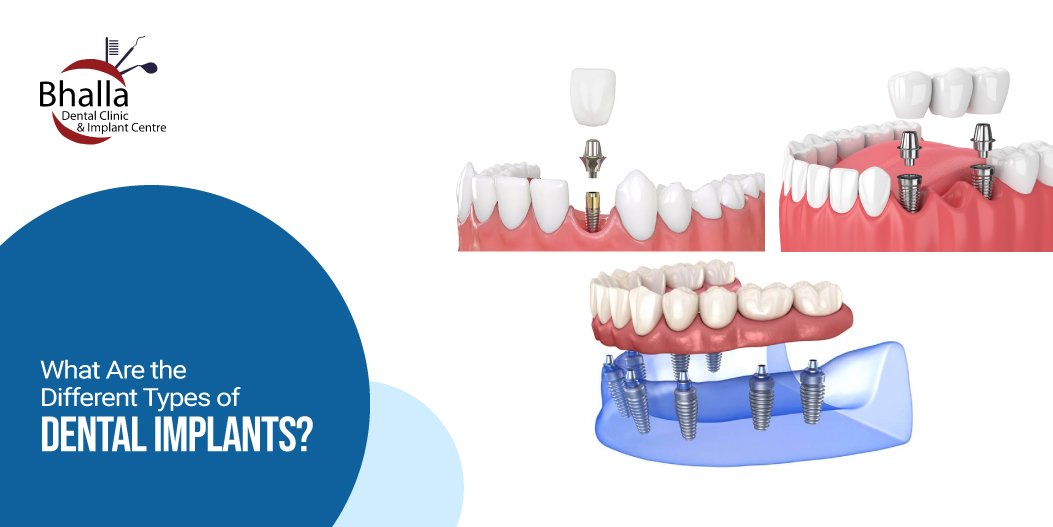
Did you ever have a tooth fall out and feel immediately awkward every time you smiled, talked or chewed? You’re not alone. Loss of teeth is far more widespread than most would believe, and with the advancements made in modern dentistry at Dr Bhalla Dental clinic, Dental Implants in Ahmedabad have become the best solution for a natural-looking restorative fix. But before you get your ass in a dental chair, realise this: All implants are not created equal. Let’s take a closer look at the types of dental implants available today and help you determine which one could be a good fit for your needs.
So, What Exactly Is a Dental Implant?
Before we rush into the various kinds, I’m going to give a little brush-up here on what is actually a dental implant. Put simply, it’s an artificial tooth root, typically constructed out of titanium, that is implanted into your jawbone. Once it has bonded with the bone (a process known as osseointegration), it becomes a solid foundation for a new tooth, bridge or denture. It’s your new tooth’s superhero cement, essentially.
Now here is the fun part! The types of dental implants and their differences.
1. Endosteal Implants – The Popular Choice
If there were a Most Wanted list for dental implants, endosteal implants would absolutely be at the top of that list. They’re the most popular and relied upon model used by dentists today.
These are small screw-shaped or cylinder-shaped implants that are placed in the jawbone. After the healing, they are used to anchor an artificial tooth or crown.
Best suited for:
Individuals with a strong, healthy jawbone and enough bone density to keep the implant in place.
Why people love them:
They’re natural, robust, and will stay in place for decades if properly cared for. And, they resemble your natural teeth; no one will even know you have them.
2. Subperiosteal Implants – The Bone Saver
Some people are not fortunate enough to possess a strong jawbone. That’s where subperiosteal implants can be of assistance. Instead of going into the bone, like endosteal implants do, these rest on top, under your gum.
Here are the basics: a metal frame gets installed under your gum tissue, and as it heals, the frame attaches to your jawbone. These are supported by posts that attach to the frame and secure your new teeth.
Best suited for:
Patients with an inadequate healthy jawbone who do not want to undergo a bone graft.
Why they’re handy:
They’re less invasive, and recovery time is usually faster. It’s a good middle ground when we have a restrained bone structure.
3. Zygomatic Implants – The Rare Yet Mighty Option
Zygomatic implants are the rarest of all types of dental implants, but also one of the most specialised. These are placed when a patient has already lost a substantial amount of bone in the upper jaw and cannot support regular implants.
Rather than being anchored in the jawbone, the zygomatic implants are instead fitted into the cheekbone (zygoma). There is more bone and a better foundation on which to anchor the implant in the cheekbone.
Best suited for:
Patients with severe atrophy of the upper jaw who wish to avoid complex bone grafts.
Why they’re remarkable:
In cases where conventional implants are not possible – or out of the question – even extreme ones, Zygomatic implants fixedly restore full function and appearance.
4. All-on-4 Implants – The Full Smile Makeover
Have you ever heard people say, “I got a full set of new teeth in a day”? They might be referring to All-on-4 dental implants. This procedure works with only four implants to handle a full arch of teeth supporters.
Rather than needing to place an implant for each missing tooth, your dentist can surgically install four implants in sections of the mouth where bone is most dense. That is followed up by fitting a custom denture, providing an almost immediate full smile.
Best suited for:
Individuals with many of their teeth missing or all of them, who are in search of a permanent and economical remedy.
Why everyone’s talking about them:
It’s quick, beautiful and eliminates the annoyance of traditional dentures. You don’t get younger when you use it, but your smile does.
5. Mini Dental Implants – Small but Strong
As the name implies, mini implants are slimmer than traditional implants. They also work well for those who don’t have sufficient bone to be candidates for full-size implants but still desire the stability and comfort only an implant can provide.
They are also frequently used to support lower dentures, preventing them from slipping or moving (or falling out) when speaking or eating.
Best suited for:
For smaller restorations, or to keep loose full and partial dentures firm in place.
Why they’re great:
It is quicker, less invasive and usually more affordable. And you get the reassurance and confidence of a firm, natural feel.
Choosing the Right Type of Dental Implant
After getting some background on the key types of dental implants, you can start to consider what’s best for you. Your dentist would like to make sure all of the above – your bone, gums and dental structure are suitable for implants before selecting the right one for you.
Here are some quick things to remember:
Good bone support and healthy gums are also related to the long-term success of dental implants.
Smokers as well as individuals with particular medical situations might need additional assessment before implant position.
Maintenance matters. And the best implants still require regular brushing, flossing and dental check-ups.
Wrapping It Up
Bhalla Dental Clinic believe in giving our patients the quality they deserve, and dental implants are more than just tooth replacements; they are a life changer! You can regain your lost confidence, eating without worry. Whether you are looking for endosteal and subperiosteal, zygomatic or mini implants! An option is at hand for everyone!
So if you’ve been pondering how to fill that gap, talk to your dentist about the varieties of dental implants available. A well-selected and maintained new smile truly can last a lifetime.
